UAL_machinic language symposium
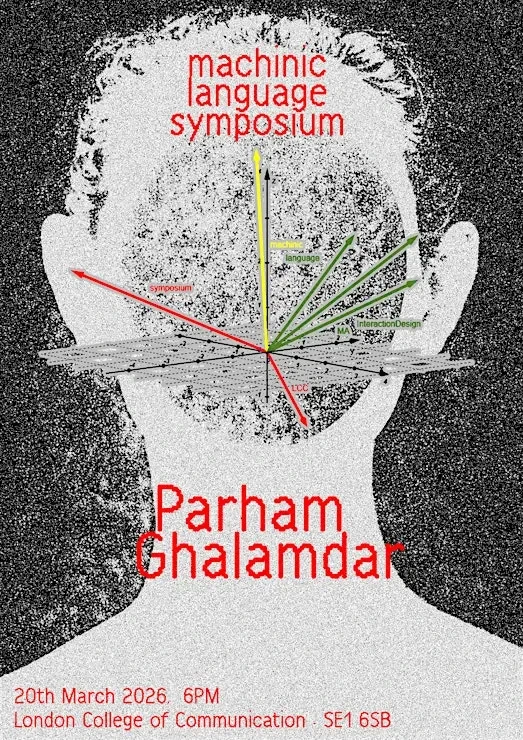
Machinic Language Symposium
UAL London College of CommunicationLondon, England
Friday, Mar 20, 2026 from 6 pm to 8 pm
Overview
Machinic Languageis a symposium series organised by MA Interaction Design at UAL London College of Communication. Across its public programme, the series approaches language as something more than speech or writing: a machinic field shaped by code, interfaces, classification, access, desire, and the systems that decide what becomes legible. The first event set that frame clearly by treating language as both body and interface, and by asking how machinic systems do not merely represent the world but help produce it. In that sense, the symposium is about language after innocence: language as protocol, as infrastructure, and as a site where technical systems reorganise culture and power.
Deep Objects, Item Literature, and the Refusal to Imageextends that frame through a theory-fiction lecture staged on the threshold between report, ritual, film screening, and speculative proposition. Beginning from drought, war, and end-time temporality, Parham Ghalamdar asks what remains for artists once image-making, authorship, and career itself no longer hold. The talk proposes the deep object as a compressed archive of collapse, turns refusal into a studio method under conditions of AI image surplus, and treats mourning as a way of working after the image has lost its ethical priority. It ends by naming item literature as a post-literary form: texts built as systems, executable objects, or payloads for machinic and deep-time circulation.
Special thanks to UAL lecturers Maria Dada and Mariana Marangoni, and the other staff of UAL London College of Communication who organised and curated in the symposium.
Transcript & diagrams
This page gathers materials from one part of that wider series. It includes the transcript and diagrams from Parham Ghalamdar’s talk:
Opening
Thank you for being here. We could not have met on a more charged day. Today, 20 March, is Nowruz, the first day of spring and the Iranian new year. And yet Iran is at war, and Tehran has recently seen black rain after strikes on oil infrastructure. So I am standing here, on Nowruz, giving a talk about the moral responsibilities of artists at the end of time. It couldn't get any more ironic.
Thank you for having me as part of Machinic Language. I want to begin with a blunt premise.
This lecture unfolds through a sequence of speculative propositions that track the breakdown of image-making, language, and authorship under ecological, political, and computational pressures, and asks what practices remain once these systems collapse. It is a theory-fiction lecture, but it is also a report from inside my practice.
I will show you two short films. I will show you images, quotes, and diagrams. I will also ask you to tolerate a certain oscillation: between documentary and myth, between fact and ritual, between the technical and the theological.
Because the supervisors of the Machinic Language, such as Palantir, are already doing that oscillation without asking our permission.
Some diagrams, quotes, and book recommendations. Two screenings. A final question, which is not what art is now, I personally couldn't care less about what contemporary art is today. The question is: what survives?
Slide 1: deadline
I want to start by saying the last thing first.
The Tigris and Euphrates are drying. the Euphrates, a roughly 2,700 km river that runs from Turkey through Syria into Iraq and supports farming, power, and drinking water for millions, could be dry by 2040.
According to repeated warnings by Iraq’s Ministry of Water Resources that the Euphrates could be dry by around 2040, and as reported and contextualized by the Center for Strategic and International Studies (CSIS) within broader regional and climate dynamics, current trends in upstream damming, climate stress, and water management might lead to the Euphrates, and to a lesser extent the Tigris, becoming functionally unusable within Iraq by around 2040.
I’m not using that as a metaphor.
I’m using it as a countdown/deadline.
Slide 2: Climate Collapse
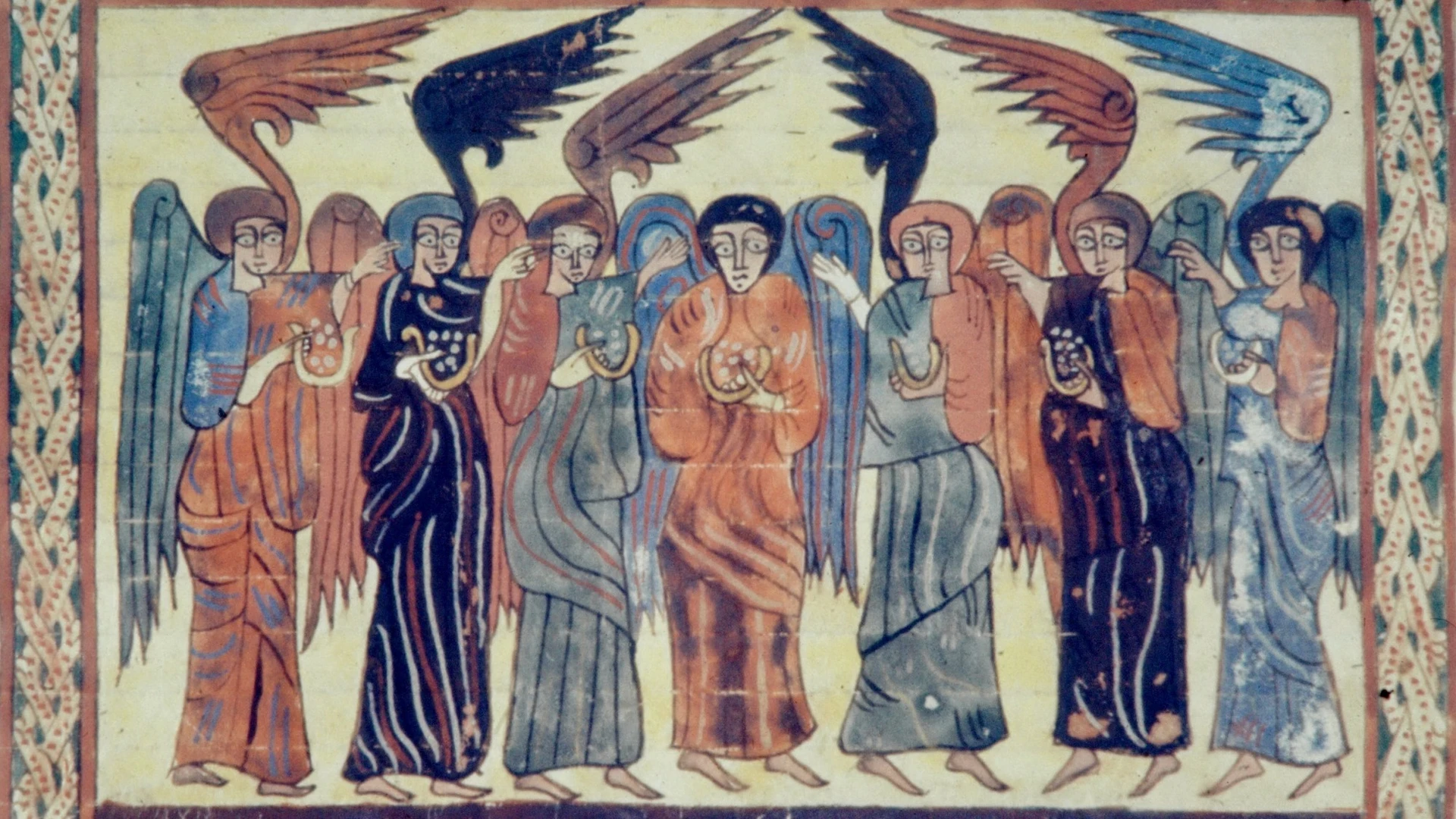
“The sixth angel poured out his bowl on the great river Euphrates, and its water was dried up, to prepare the way for the kings from the east.”
— Book of Revelation 16:12 (NRSV / ESV equivalent)
That phrase, “to prepare the way,” can be read as a logistics line. A corridor opens. A passage becomes possible. And when passages open, states build doctrines around them.
In an end-of-time context, “prepare the way for the kings from the east” can sound like a preauthorization, a protocol that says: when the barrier fails, sovereignty will be enforced by fire. Not because the text commands it, but because modern borders already behave like that.
And then the irony lands. Who is crossing toward the West from the East today. Not kings. Not armies. Mostly people escaping collapse, war, drought, sanctions, and the aftershocks of empire. Asylum seekers.
But the border machine needs a figure of hostility to justify itself, so it upgrades them rhetorically into an invasion. This is where asylum seekers get weaponised. Not because they are a weapon, but because they are treated as one.
This is also the paranoia Reza Negarestani maps in Cyclonopedia, where war shifts from open ground to holes, tunnels, porous routes, and where migrants become legible to power as vectors, breaches, and infrastructure.
So the terrifying part isn’t that ancient texts predicted it. The terrifying part is that our century is executing it.
Climate dries the river, movement accelerates, and the border responds by turning passage into a kill-zone: legally, rhetorically, operationally.
And that is why prophecy stops being a religious story here. It becomes an infrastructural report. A runbook for collapse.
Because when resources dry, borders do not stay where they are on maps. They contract. First the river becomes the border, then the city, then the neighbourhood, then the building, then the body.
This is where fascist logic activates, not as ideology first, but as arithmetic. It calculates scarcity and redraws the circle of beneficiaries around whatever is left.
When there is abundance, the category of “us” can expand. When scarcity intensifies, the circle tightens. More groups become expendable. And eventually even parts of the inside become outside. The machine starts collapsing inward.
So “prepare the way” stops sounding like myth. It starts sounding like policy.
Slide 3: Career logic
This produces a brutally simple question. What is left for an artist to do at the end of time? Not at the end of a career. At the end of the conditions that made careers possible.
And once you imagine this horizon, once you accept that the rivers are dying, another question arrives immediately. If the world is ending, why would you want a career. And that changes the function of an art practice.
Career logic is: Visibility / prestige / money / hero narrative
A lot of contemporary art still behaves like the world is stable. The model is sterile but familiar: produce, circulate, attract attention, convert attention into capital, convert capital into legitimacy. Even "political art" can become a kind of virtue manufacturing. A machine for feeling good. A machine for uninterrupted sleep.
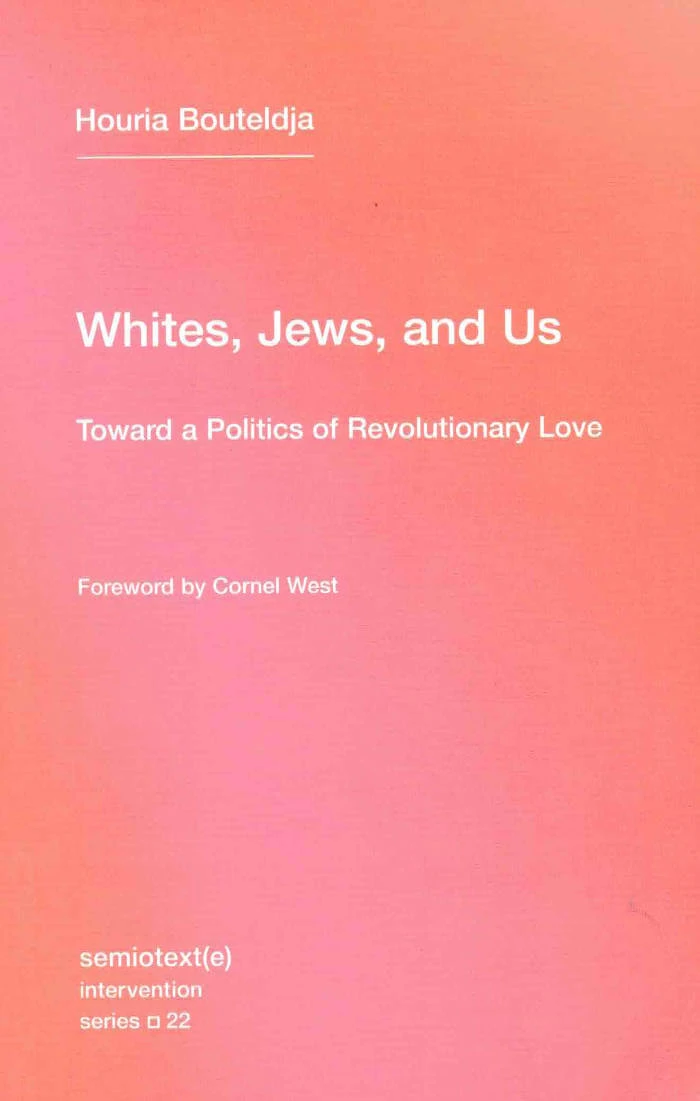
Houria Bouteldja gives you the political anatomy of that comfort. She describes the white population that owns France as “the small shareholders of the vast enterprise of the world’s dispossession.” If you are a shareholder, no matter how small, you do not want the war front near you. You want distance. You want managed guilt. You want culture as insulation.
And she says it plainly: “To sleep in peace is essential. And to wake up, proud of one’s own genius, is even better.”
That line is not just psychology. It describes an economy of innocence. So before we complain about AI slop, we should ask what kind of cultural slop the machine is inheriting: repetitive moral performance for the comfortable while catastrophe continues in full view.
Slide 4: Artist as Scout of Metaphors
So I want a definition of the artist that refuses that role, to manufacture innocence for the Epstein class. Let me propose a definition of the artist that has nothing to do with careers.
In a tribe, the hunter leaves the safety of the social web not only to bring food back, but to expand the horizon of the tribe. The hunter returns with news: where danger is, where scarcity is, where new routes exist.
The artist is the same function, but in the space of meaning. The artist exits the hierarchies of society and knowledge, steps outside the existing grammar of what can be said, and comes back with metaphors that widen the collective imagination.
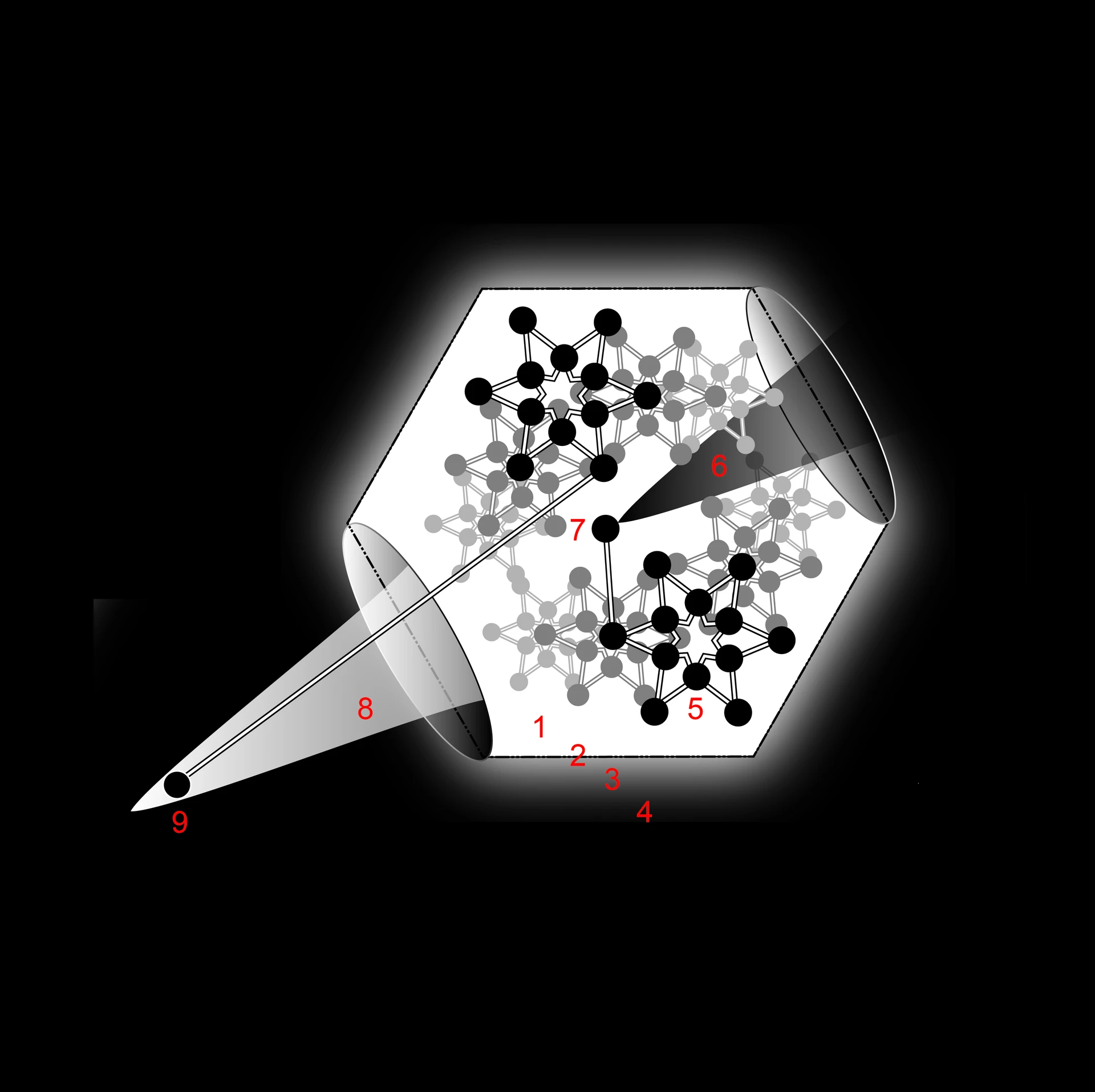
Look at this diagram as a model. The hexagon is the tribe. The network is the known world. The cone is attention leaving the enclosure. The artist is the one willing to walk into the dark and return with a new coordinate. And in an end-of-time context, that is no longer optional. Horizon expansion becomes survival.
Abduction of the Outside/Unknown-Unknown vector
(the line of contact between seeker and system, through the bottleneck)
1 Boundary of the closed hierarchy (entry point where outside must be translated)
What's within the boundary is the circulation step (made publishable, teachable, repeatable)
2 Compression step (outside signal reduced into a carryable form)
3 Encoding step (signal turned into language, image, concept, rule)
4 Unknown Unknown
5 Power cluster (where meaning concentrates and reproduces itself)
6 Dormant or weak field (grey network: links that exist but rarely count)
7 Prophet node (inside relay that receives the return and makes it legible)
8 Search cone (directed attention, the outward probe through the known-unknown halo)
9 Seeker in the outside (artist function outside the hierarchy)
Slide 5: Imagination vs. culture slop
Imagination is the capacity to anticipate continuity or discontinuity of patterns, to sense what might persist and what might break. Now here is the uncomfortable part. What if we do not want to imagine the future because it is terrifying, because it is posthuman, because it does not centre us.
So we outsource imagination to the machine.
That is one reason these systems feel seductive. They do not just write and render. They absorb the terror of imagining for us. That, too, is a form of hypernormalisation. I mean where are all those moral/philosophy/art heroes? any of them gave a single comment on the genocide in october 2023? They're all manufacturing innocence for the Epstein class. Before we complain about AI slop, ask what slop it is inheriting. The art world has normalized repetitive moral performance for the comfortable while catastrophe continues in full view and live-streamed.
So the question is not why AI is producing slop. The question is why we normalized slop as culture.
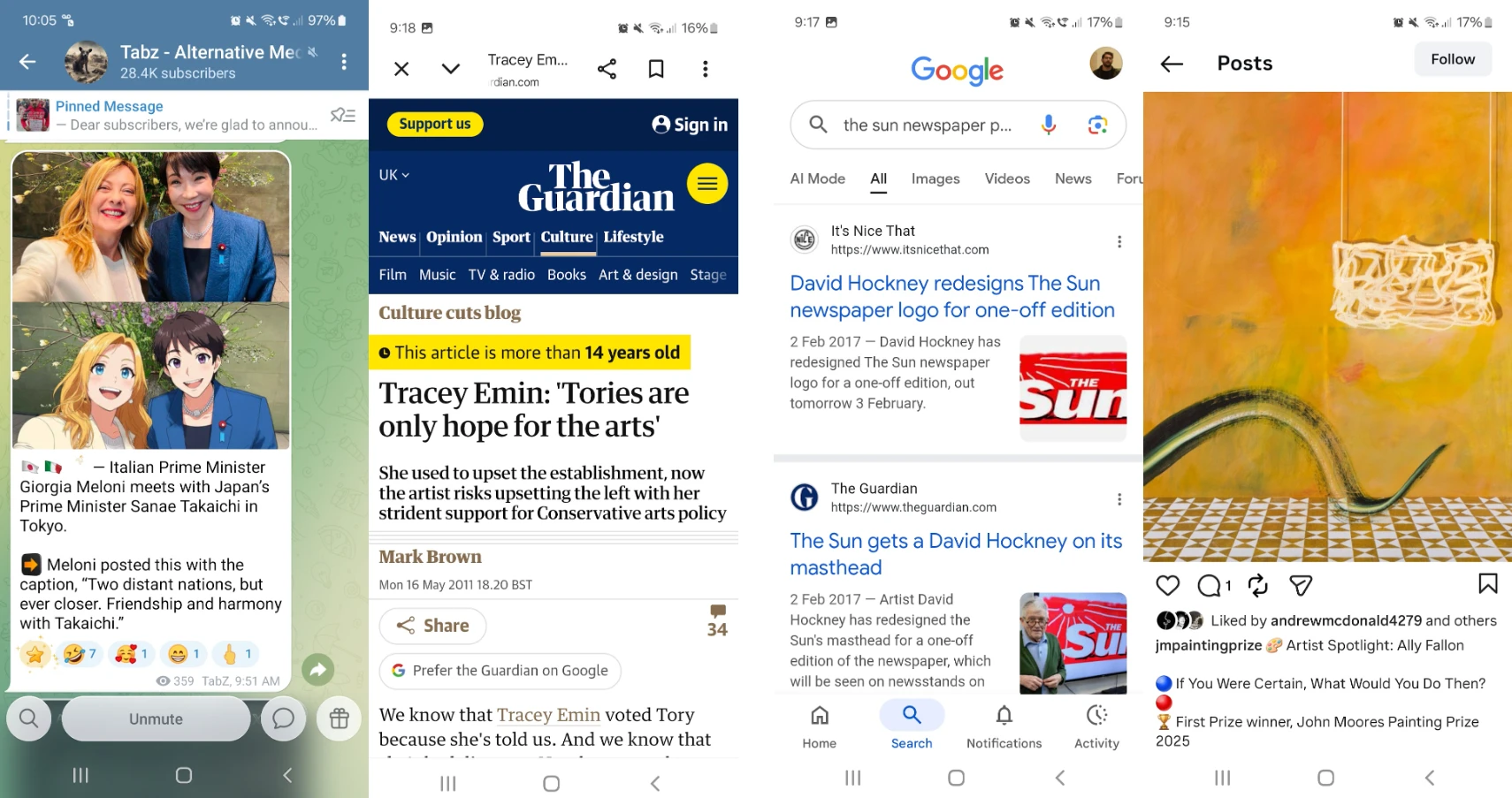
I will give you a very tangible example. The three examples on the left are very much self-explanatory. The one on the right is the painting which won the John Moores Prize 2026. The artist statement of the painting is about, I quote, "This painting, in particular, revolves around moments of risk-taking." I wouldn't say more, I believe you are an intelligent, educated audience.
That is why Bouteldja’s line about sleep matters here: “To sleep in peace is essential. And to wake up, proud of one’s own genius, is even better.”
Sleep is not just rest. It is a political infrastructure. It is one reason war is kept distant from Europe. Distance is the technology that produces innocence.
At that point I realised the logic I inherited from art school no longer applied. The future it was training me for was already collapsing. So the question shifted. If there is no career to build, what form of action remains. This is where I want to borrow a word from my Iranian revolutionary Marxist Shia heritage, and strip it to abstraction. The word: Martyrdom.
Strip it of any ideological or cultural association. Think of it only as an abstract gesture: I voluntarily accept that a meaningless life was forced on me, and I decide to give the ending another meaning. A refusal to keep playing.
Martyrdom, in the stripped-down sense I mean here, is not random sacrifice. It is a response to threshold. It happens when a world has crossed the point where reform and continuation are no longer the same thing. That is why I want to turn, briefly, to two narratives structured by warning, threshold, and irreversibility.
Slide 6: Threshold
Look at the narratives of the people of Lot. Look at the Ark of Noah. In these stories, there is a structure that feels computational. I mean that as a reading of narrative structure, not as theology.
Warning. =>>>
Threshold. =>>>
Irreversibility.
Once the condition is met, intervention no longer functions, because the world has passed a point where mercy would require rewriting the entire system. So the narrative does not offer rescue. It offers extraction and preservation. There are momements that even god, the fictional ultimate source of computation, doesn't have the computational power to calculate reversibility.
So if we accept collapse as a threshold, then art stops being an aesthetic practice; instead, it becomes an engineering problem.
What do we extract.
What do we preserve.
What do we ship into deep time.
And that leads to the concept that holds this whole lecture together:
Deep objects.
Slide 7: Deep Object
A deep object is not an ornament. It is not necessarily a message.
It is a compressed archive of collapse.
A trigger with a delayed fuse.
Something that survives translation.
Survives copying.
Most importantly, survives the loss of its original context.
I am not using “deep object” only as a metaphor. I am borrowing from computer science here, from object theory, distributed systems, and actor models, to use “deep object” as a synthetic term.
A workable genealogy of deep object starts with Charles H. Bennett’s early work on logical depth in the early 1980s, including an unpublished 1982 manuscript and then his 1988 essay Logical Depth and Physical Complexity, where the phrase enters the vocabulary of algorithmic complexity; it is then carried into wider circulation by Ming Li and Paul Vitányi in their 1993 book An Introduction to Kolmogorov Complexity and Its Applications; and Reza Negarestani, in his preface dated 23 July 2024 in Persophobia, explicitly inherits that line, names Li, Vitányi, and Bennett, and recasts the deep object from a technical concept in computation into a philosophical and cultural figure moving across history and time.
A deep object is not reducible to its surface interface or its current state. It has hidden state. It has Temporal depth: its past affects its future, Identity persistence across time and location, Operational autonomy, You cannot fully know it from its API (Application Programming Interface.) You can only interact, observe, infer what it is.
Slide 8: The Leak
This is why the Actor Model matters. The actor is opaque:
You do not open it.
You message it.
It responds.
Its interior withdraws.
But its consequences remain.
So when I say deep object, I mean something whose behaviour is not collapsible into representation.
And once that is true technically, it becomes true politically. I will give you a tangible example:
Revolutions are deep objects. They outlive their slogans. They keep executing. They persist as attractors that gather memory, images, and tactics.
So once I understood collapse as a threshold, the question shifted inside my own practice. Not what to produce, but what to eliminate among the characteristics of my practice, and what to carry across the threshold. What has to die, and what has to be smuggled into whatever comes after.
What you are about to see is one attempt at that elimination.
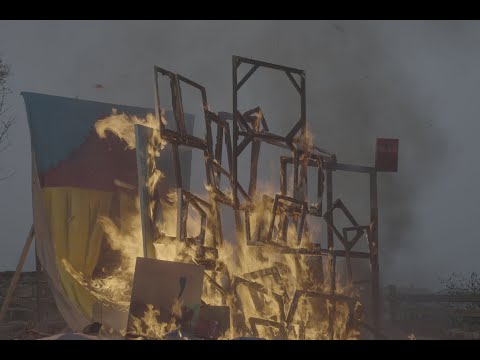
FILM CUE : THE SIGHT IS A WOUND SHORT FILM
I want to show you the first short film. It’s called THE SIGHT IS A WOUND.
Please watch it as a document of refusal.
Slide 9: AI SURPLUS, STUDIO AS REFUSAL
AI introduced a new relation to images.
Superabundance. Every image you can imagine is already latent as a mathematical possibility. We do not create images anymore. We summon them.
And there is something crucial here. If I give you the model name, the seed number, the prompt, and the settings, you can generate the exact same image, pixel by pixel. So the space is not infinite. It is infinite-minus-one. Which is still unimaginably large. Large enough to destroy human priority.
On 7 October 2023, something in me snapped. I realised any painting is a failed painting before I even start. Because choosing which image deserves to exist became impossible.
The best painting today is the painting whose painter decided not to paint it.
So the studio becomes a site of refusal. Not a site of production. A site of ethical interruption. A place where you refuse to participate in the economy of images.
But refusal is not the end. Refusal creates a vacuum. And the vacuum demands a new ritual. If we cannot prioritise images, then maybe we can mourn them.
When painting collapses, you don’t simply stop seeing. Specially if one was a painter existentially enjoying painting. There will be grieve; grieve is love and joy with no new destination. You have to grieve the function that images used to have. So my use of AI was not a celebration of automation. It was a way to hold grief without consuming the world further.
This brings me to the second film. BURIAL WITHOUT BODY. It’s built from an Iranian story from the 1950s: farmers stage a funeral for God because it hasn’t rained. A funeral for Allah. An impossible ritual. This is specially important since Allah, the god, in Islam doesn't have dimensions as god does in Christianity. So, how do you even kill a god with no dimensions, forget about burying and grieving it, to begin with?
The film is an attempt to think the unthinkable. Not as heresy, I am indeed an Iranian Shia Muslim, but as a philosophical question/thought around the impossibility.
As procedure.
How do you bury absence.
How do you mourn without a body.
How do you produce a ritual for ecological exhaustion.
FILM CUE: BURIAL WITHOUT BODY
Please watch BURIAL WITHOUT BODY.
That film is a funeral for a sky that does not answer. And it is also a rehearsal of loss. Because the future will ask us to mourn things we cannot properly name.
Slide 10: Item Literature
And now, after mourning, we arrive at a form. If images are compromised, and mourning becomes the method, then we need objects that can carry mourning forward. Not as sentiment. As payload. This is where the book arrives.
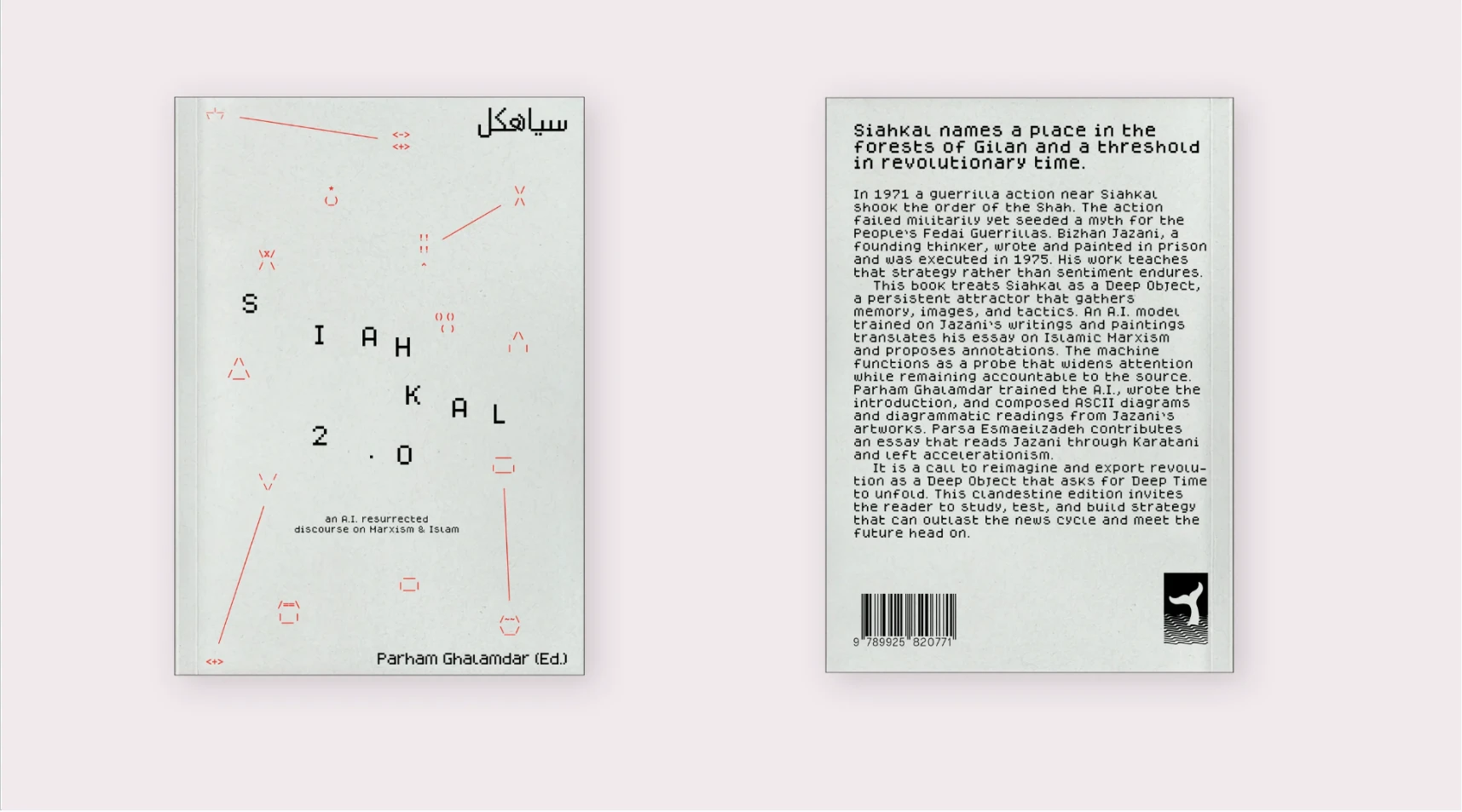
This is the book you invited me to speak about: SIAHKAL_2.0.EXE.
I want to be precise. This is not a book in the traditional sense. It is a digital object. An executable. A deep object. It begins with Bizhan Jazani’s essay on Islamic Marxism. I trained a model on Jazani’s writings and visual material, used that system to translate, annotate, and extend the text, and treated the whole thing less as authorship than as apparatus-building.
The work was not writing. The work was constructing a system. A sequence of prompts. A procedural framework. My role was not to author every sentence, but to engineer the conditions under which this object could emerge. The system is the artwork. The text is residue.
This reminds me of a quote by Marx in the “Fragment on Machines” in the Grundrisse. There Marx argues that as machinery develops, the worker stops being the direct source of production and becomes more like a regulator of the process. One key line (paraphrased tightly) is:
"The worker no longer inserts a transformed natural thing between himself and the object; instead, he inserts the process of nature, which he has transformed into an industrial process, between himself and nature, and supervises it."
I would put emphasis on the "Supervises it".
This is what I call item literature. Like the books you find inside video games. You read a few lines You move on to shoot the zombies, monsters, robots, and aliens. The text exists as data inside a simulation. And now the simulation is reality. Think of it less as literature in the old sense and more like an object you find inside a world: partial, atmospheric, functional.
So maybe a new genre is emerging. Post-literacy. Non-human. Books written by AI to be read by AI. It is a technical condition.
If this sounds abstract, look at the reading environment we already live in. In the UK, only half of adults now read regularly for pleasure, down from 58 percent in 2015. Among children and young people aged 8 to 18, only 32.7 percent say they enjoy reading in their free time, and only 18.7 percent say they read something daily, the lowest levels recorded since 2005. At the same time, UK adults spend around four and a half hours online each day, rising to more than six hours for 18 to 24 year olds, and most people increasingly encounter news through online intermediaries, social media, and video platforms. So the issue is not that people have stopped receiving information. It is that information is increasingly encountered as fragments: feeds, clips, captions, alerts, summaries, rather than through sustained reading. That is one practical meaning of post-literacy.
Imagine enough computation to calculate every branch, every ending, every path. At the end of that calculation, the future is already sitting there as a completed space of possibility. From that point of view, time moves backwards. The future pulls the present into alignment. It recruits the matter, labour, and attention it needs to become real. In that posthuman sense, humans are not the centre of the narrative. We are a phase in the process, a temporary layer for gathering and externalising the archive. perhaps biological data gatherers. Item literature is one symptom of that handoff: texts that no longer need us at the centre.
The simple timeline diagram of this would be: dinosaurs → fossil → oil → engines, humans → data → models → machinic readers
I did not read the final text before print. That was part of the work. Refusal becomes method again. Just as I refused the image, I refused the comfort of interpretation. Because deep objects are not reducible to their interface.
Unreadability is not failure. It is fidelity to depth.
So I want to end with the Ark, As an interface. The Ark is a curatorial problem. When intervention is impossible, you extract and preserve. So the artist at the end of time is not a producer for the market. The artist is a curator of payload... A selector, a curator in the most extreme sense of it. Someone deciding what meanings and values should be exported as deep objects.
Top: The cover design
Bottom: A few selected pages
Final word
I want you to walk away with a practical discomfort. Take ten seconds. Name one thing that must survive.
Not as nostalgia. As operational value.
A practice.
A concept.
A commitment.
If you had to put three items on the Ark, what are they. And what form do they take so they can outlive you.
Because if you cannot name what should survive, the machine will name it for you. That is the risk. That is why we curate.
.
.
.
It is usual to end a talk with applause. I would rather end with ten seconds of silence for the innocent Iranian lives lost in this war. So please, no clapping. Thank you.
.
.
.
.
.
.
.
.
.
.
EMBEDDED MEDIA
https://www.youtube.com/embed/u7abcDebhQE
https://www.youtube.com/embed/McLaItNpGpY