Parham Ghalamdar: Textures of Thoughts
Authored by the artist and essayist Sam Samiee
Commissioned as part of the UKNA 4C Group Bursary
Parham Ghalamdar:
Textures of Thoughts
"Parham Ghalamdar is an artist who deftly navigates the intersection of traditional painting and contemporary media, blending classic techniques with spray paint, glazed ceramics, and immersive installations. His work invites viewers into a dialogue where the materiality of art and the portrayal of objects converge, challenging the boundaries between representation and physical presence.
His installations juxtapose the softness of fur-like tent entrances with the weight and enigma of dense, substantial objects. This interplay creates a constellation of elements that urges the viewer to engage deeply, decoding the unfamiliar and exploring the layers of meaning within the artwork. The tension between the aesthetic pleasure found in his skillfully painted floral still lives and the dissonance introduced by the titles and spatial interventions disrupts any simplistic reading, pushing the viewer beyond the immediate visual appeal.
Ghalamdar’s work is more than a series of paintings; it represents a conceptual “thinking space” where the act of creation itself is put on trial. His background in street art and his confident use of ready-mades, like painted helmets and graffiti-like wall marks, blur the lines between painting, sculpture, and installation, making his exhibitions more than the sum of their parts.
Walking through Ghalamdar’s installations, one encounters landscapes with dystopian undertones—dried-out lands, ancient-seeming earthwares—arranged at varying heights and in diverse frame sizes. These elements collectively create a serious, investigative atmosphere, as if the viewer is invited to explore an ambiguous territory, both familiar and foreign.
While his paintings stand on their own as objects of interpretation, it’s in the curated spaces—seemingly a reflection of Ghalamdar’s own obsessions and priorities—where his artistic vision truly comes to life. These spaces suggest that for Ghalamdar, the act of making and producing art is as significant as the finished pieces themselves.
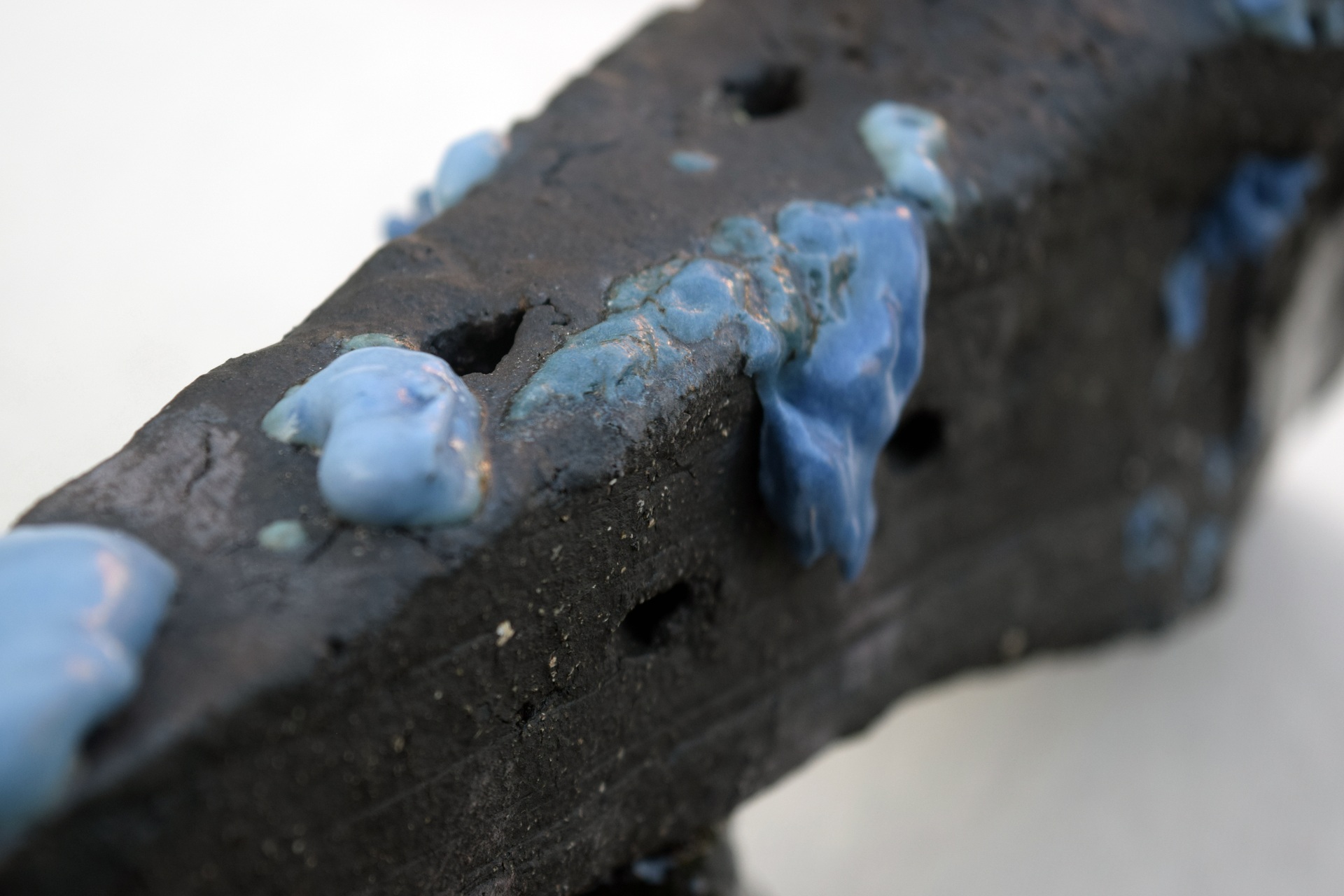
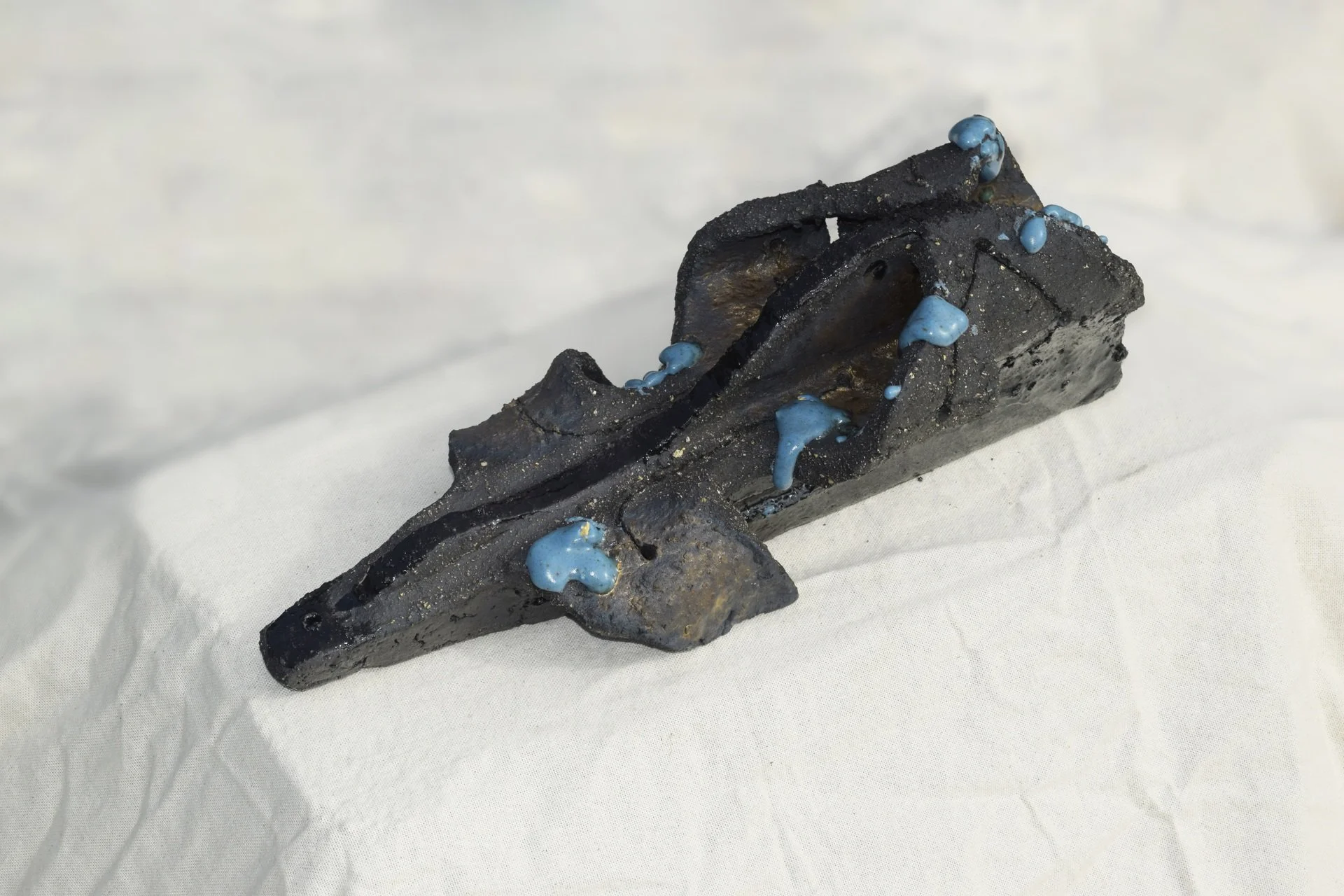
The key to Ghalamdar's presentations and paintings, as well as his earthenware objects, lies in the visual element of texture. Texture serves not only as a lens through which to view the production process but also as a reflection of the ideas and concerns that shape his work. On another level, the textured surfaces in his contemporary art presentations evoke a museological approach, reminiscent of how artifacts from past and ancient times are displayed.
For instance, Ghalamdar’s research delves into the history of science and science fiction, with his earthenware resembling the Baghdad Battery—a 2,000-year-old artifact from the Parthian period, found near Baghdad and composed of a clay jar with an asphalt stopper. His textured ceramics evoke objects one might find in a museum of ancient inventions, yet he brings them into a narrative space that juxtaposes multiple textures, each corresponding to different fields of historical research or artistic exploration. This deliberate disharmony within the exhibition space mirrors the process of inquiry and experimentation that underpins his studio practice and exhibition-making.
Texture, in Ghalamdar's work, extends beyond the modernist understanding rooted in the Bauhaus tradition. It also draws from the textures explored in the past few decades of institutional critique, enriched by disciplines like the humanities, sociology, and philosophy. Ghalamdar's fascination with the philosophical endeavors of Reza Negarestani, for example, influences the affective textures in his work. However, his approach isn't limited to philosophical or fictional sources; it also engages with non-philosophical, non-fictional fields such as history, technology, and anthropology. As a result, museology and the presentation of material history become additional media in Ghalamdar’s artistic palette, seamlessly integrated into his mode of painting and broader creative process."